





News
ABS economic convergence box: cost-effective and flame-retardant safety double guarantee
The Trap of Price Involvement: Low Price ≠ Cost-Effective
1. The Hidden Costs Behind Low Prices
In order to compress costs, some manufacturers use non-flame-retardant materials, simplify the lightning protection module, or reduce the level of protection, which results in the convergence box being prone to deterioration, short-circuiting, and even fires in extreme environments. For example, a low-priced convergence box due to insufficient flame retardancy of the shell, melting and dripping after a lightning strike, igniting the surrounding components, resulting in power station shutdown losses of more than one million yuan.
Lesson: Low-priced products may make customers bear higher O&M costs, insurance costs, and even legal risks.
2. ‘Volume price’ sacrifices service and responsibility
Under the low price competition, manufacturers often cut back on after-sales service inputs, resulting in customers being unable to obtain timely technical support when failures occur. A distributed power station due to the convergence box fuse frequently burned, the manufacturer to ‘non-quality issues’ as the reason for refusing to repair, and ultimately the customer had to replace the equipment at their own expense, the return on investment cycle is extended.
Truth: The real cost-effective need to take into account product performance and long-term service, rather than simply price.
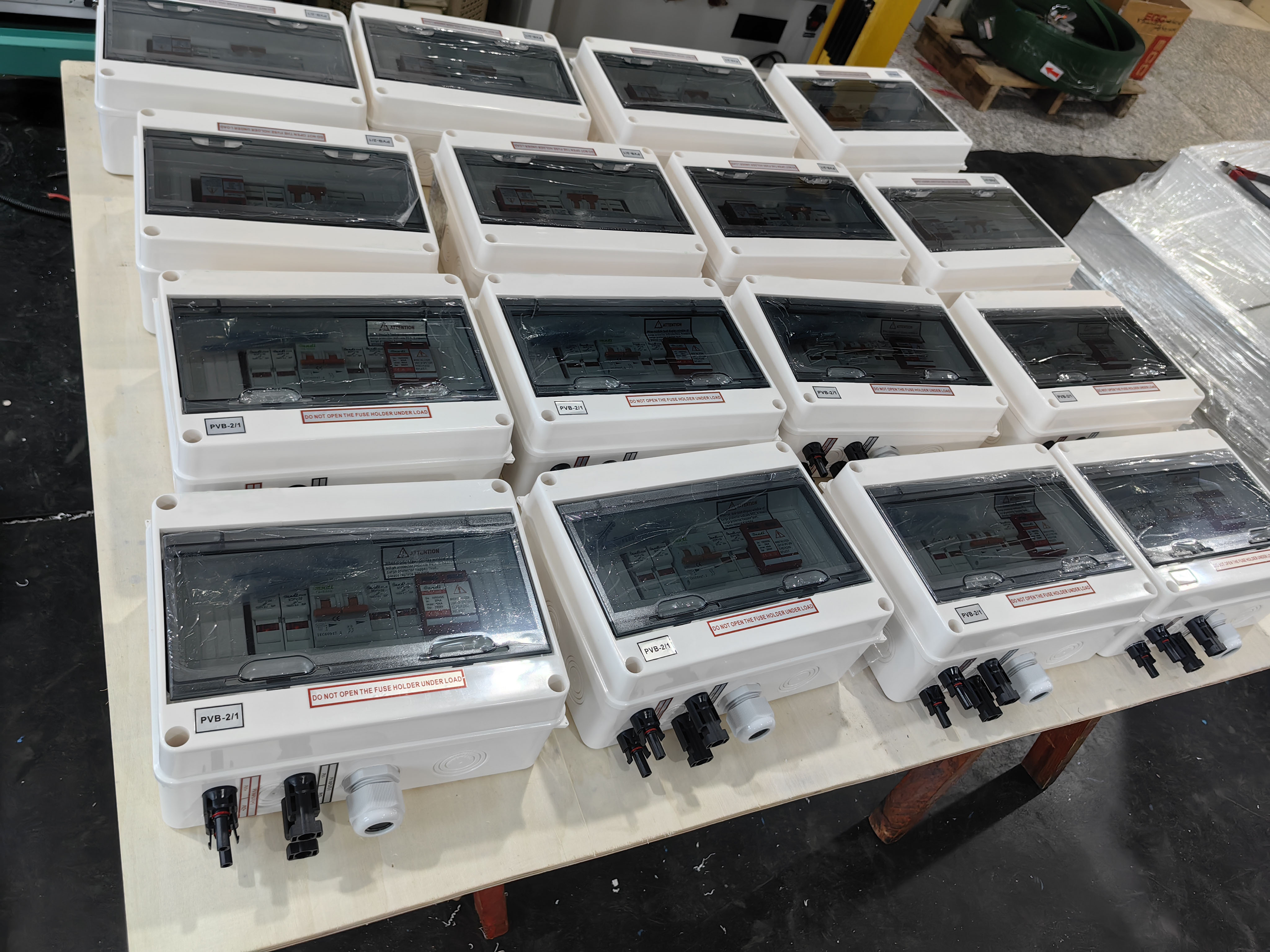
ABS economic convergence box: cost-effective and safe ‘win-win way’
1. Material and technology: find a balance between cost and safety
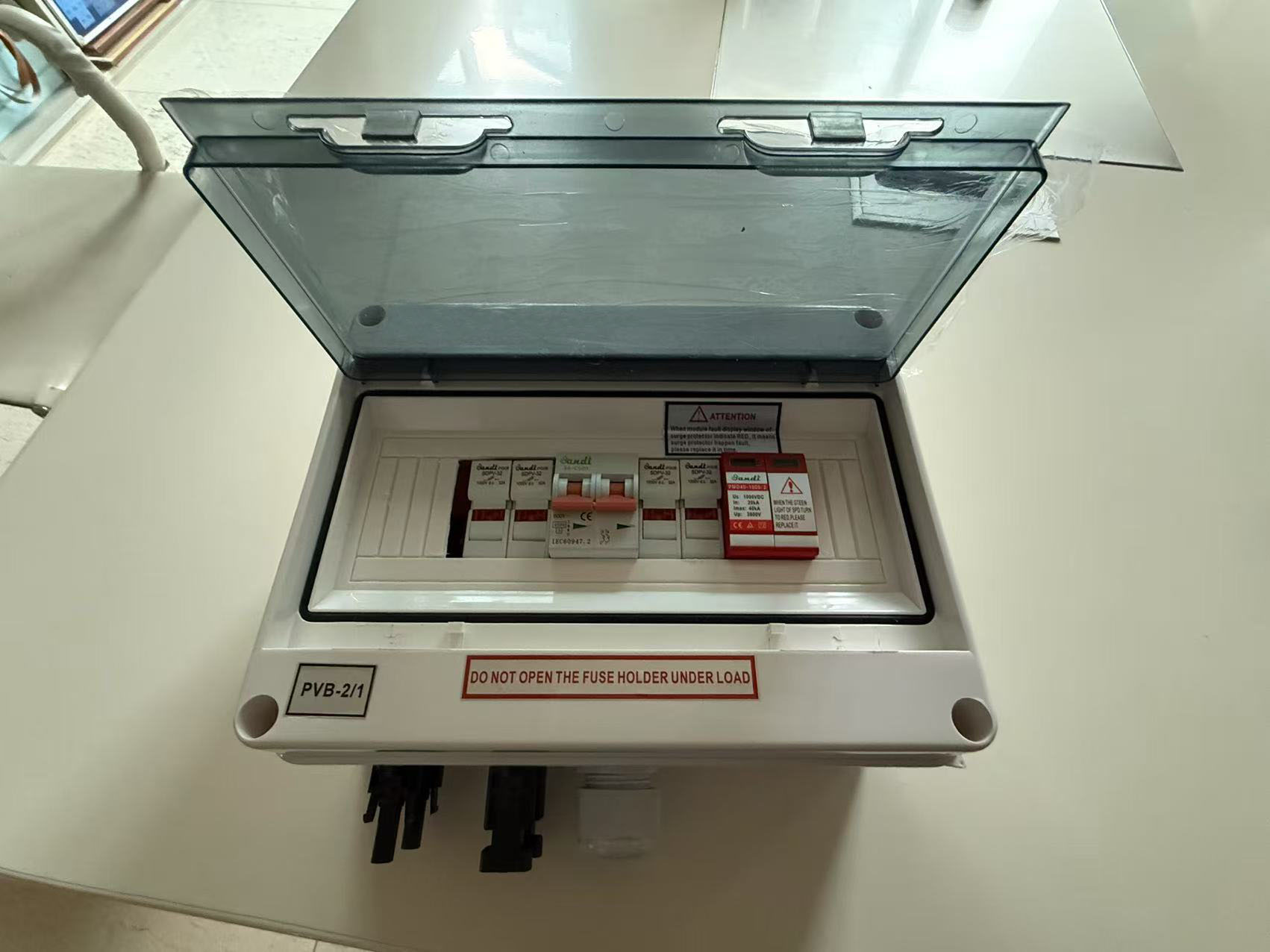
Flame retardant ABS shell: UL94 V0 certification, self-extinguishing from fire and no melt dripping, fire performance is better than ordinary plastic, but the cost is 40% lower than the metal box.
Modular design: internal components (e.g. fuses, lightning protectors) can be replaced independently, reducing maintenance time by 50% and labour costs.
Streamlining of functions: Focusing on core functions such as current convergence and DC fusing, and omitting non-essential configurations such as wireless communication, avoiding the premium caused by ‘functional redundancy’.
2. Flame retardant safety: from ‘passive protection’ to ‘active warning’
T1 level lightning protection module: response time <25 nanoseconds, can discharge 40kA lightning energy, lightning failure rate reduced by 90%.
Insulation monitoring technology: real-time detection of the impedance to ground, when the insulation performance drops to 500kΩ automatic alarm, to prevent leakage fire.
IP65 protection level: dustproof and waterproof, adapting to the coastal high humidity and sandy environment. After 5 years of operation of an offshore photovoltaic project, there is no corrosion of the box, and the performance of the internal components is stable.
There is no winner in the price war, the value war is the long-term way
In the photovoltaic industry from the ‘scale expansion’ to the ‘quality and efficiency’ transition today, customers need not only low-priced products, but also to avoid risk, protect the income of the ‘ safety partner’. ABS economic convergence box through the material optimisation, function streamlining, risk warning three strategies, to achieve a perfect balance between cost-effective and safe, proving that: only to create long-term value for customers, the enterprise can win the respect of the market, the business can be done for a long time.